
Discovering a destination where centuries of history remain part of everyday life, creating a journey through the stories that have shaped one of Europe’s most remarkable capitals
Some cities preserve their history in monuments and museums. In Sarajevo, history is encountered in everyday moments. It lives in the streets of the old town, in family traditions passed from one generation to the next, and in the landmarks that have witnessed some of the most significant chapters of European history. Exploring Sarajevo is not simply a journey through the past; it is an opportunity to experience how memory continues to shape a modern city that honours its heritage while looking confidently towards the future.
As the capital of Bosnia and Herzegovina, Sarajevo has long stood at the crossroads of cultures and civilisations. Ottoman, Austro-Hungarian and modern European influences have each left their mark on the city, creating a destination where centuries of history can be explored within a relatively compact and walkable urban landscape. Rather than existing as separate chapters, these influences come together to form a living narrative that continues to evolve.
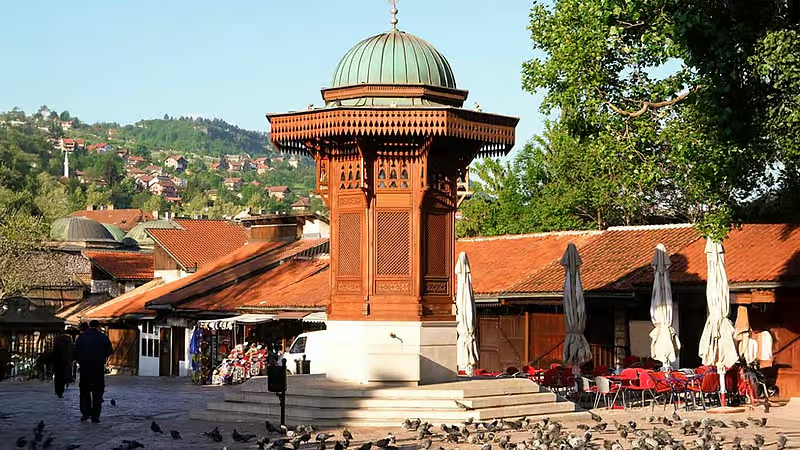
That story often begins in Baščaršija, Sarajevo’s historic old town. Established during the Ottoman era, the district remains the cultural heart of the city, where traditional workshops, cafés and historic buildings line narrow cobbled streets. While visitors are drawn by its architectural heritage, what makes Baščaršija particularly memorable is its sense of continuity. Many family-owned businesses have operated here for generations, preserving crafts, customs and traditions that connect the present with the past. Conversations with local shopkeepers often reveal stories passed down through families, offering visitors a glimpse into the personal histories that have shaped the city over time.
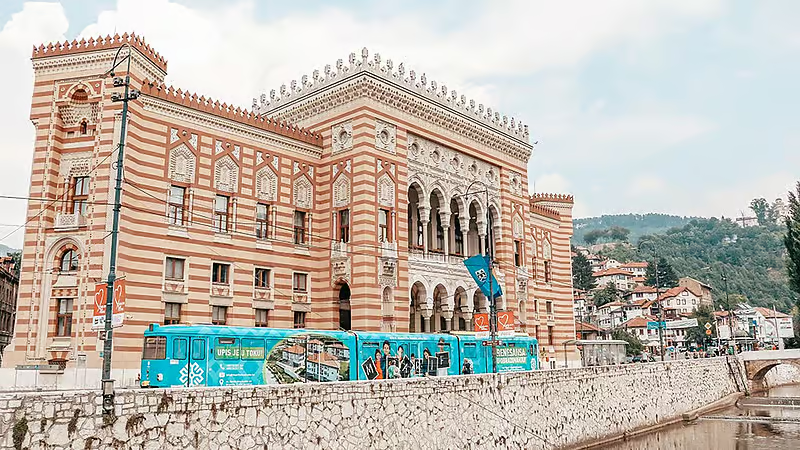
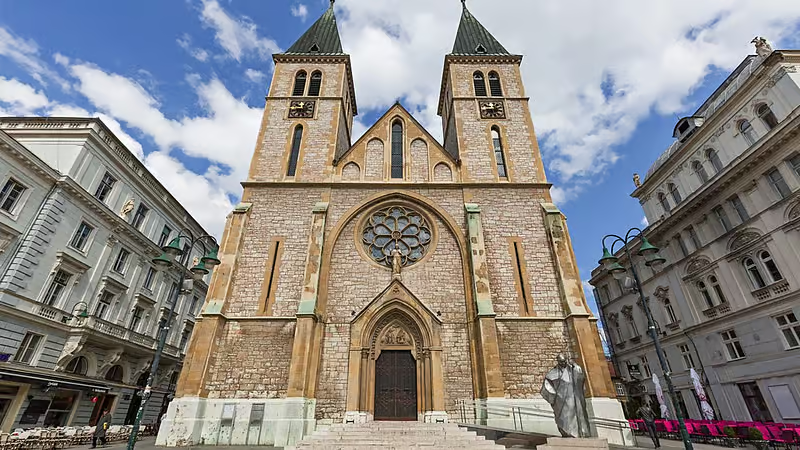
Walking beyond the old town reveals another chapter in Sarajevo’s story. Elegant Austro-Hungarian buildings, grand boulevards and public squares reflect a period that transformed the city’s appearance while adding new layers to its cultural identity. The coexistence of Ottoman-era landmarks, churches, synagogues and Austro-Hungarian architecture creates a cityscape that reflects centuries of cultural exchange and coexistence.
Few places illustrate Sarajevo’s place in world history more clearly than the Latin Bridge. Standing beside the Miljacka River, the bridge appears modest at first glance, yet it occupies a pivotal place in global history. It was here, in 1914, that the assassination of Archduke Franz Ferdinand triggered a chain of events that led to the First World War. Today, visitors gather at the site not only to learn about the event itself but also to reflect on how a single moment in Sarajevo influenced the course of the twentieth century.
The city’s more recent history is preserved at the Sarajevo Tunnel Museum, one of the most significant sites for understanding Sarajevo’s resilience. During the siege of Sarajevo in the 1990s, a tunnel constructed beneath the airport served as a vital lifeline for residents, allowing food, medicine and essential supplies to enter the city. Today, the museum offers visitors an opportunity to learn about this chapter through photographs, artefacts and personal accounts that reveal the determination of ordinary people during extraordinary circumstances.
For many residents, these stories are not distant history. Memories of the city’s challenges and recovery continue to be shared within families and communities, ensuring that important lessons are passed from one generation to the next. Local guides frequently enrich visits with personal reflections and family tales, helping visitors understand not only the events themselves but also their lasting impact on the people who experienced them. These perspectives transform historical sites into places of human connection and remembrance.
What makes Sarajevo particularly compelling is the way it balances memory with progress. Historic landmarks stand alongside contemporary galleries, modern cafés and vibrant public spaces. Residents gather in squares that have witnessed centuries of change, while a new generation contributes to the city’s evolving cultural and creative landscape. The result is a city that respects its past without becoming defined by it. Beyond its museums and memorials, Sarajevo encourages visitors to engage with history in a more personal way. Whether listening to stories from local residents, exploring neighbourhood streets or discovering traditions that continue to thrive today, travellers encounter a city where the past remains visible and relevant. History is not confined to exhibition halls; it forms part of the rhythm of everyday life.
The city’s setting adds another dimension to the experience. Surrounded by mountains that frame the skyline, Sarajevo combines historical exploration with natural beauty. The Olympic mountains of Trebević, Igman and Bjelašnica are located just a short drive from the city centre, offering visitors an opportunity to complement cultural discovery with outdoor experiences and panoramic views of the region.
For travellers from the Gulf, Sarajevo offers a distinctive European experience that combines accessibility, cultural richness and genuine hospitality. The city’s heritage is reflected not only in its landmarks and traditions but also in its culinary culture, where halal dining options are widely available across restaurants, cafés and local eateries. Together, these elements create an experience that feels both welcoming and enriching.
arajevo’s enduring appeal lies in its ability to turn history into something deeply personal. Every landmark, neighbourhood and museum contributes to a story that spans centuries, while the memories of its people continue to give that story meaning. For visitors seeking a destination that offers both cultural depth and human connection, Sarajevo provides an opportunity to experience history not as a distant record of events, but as a living part of everyday life.